


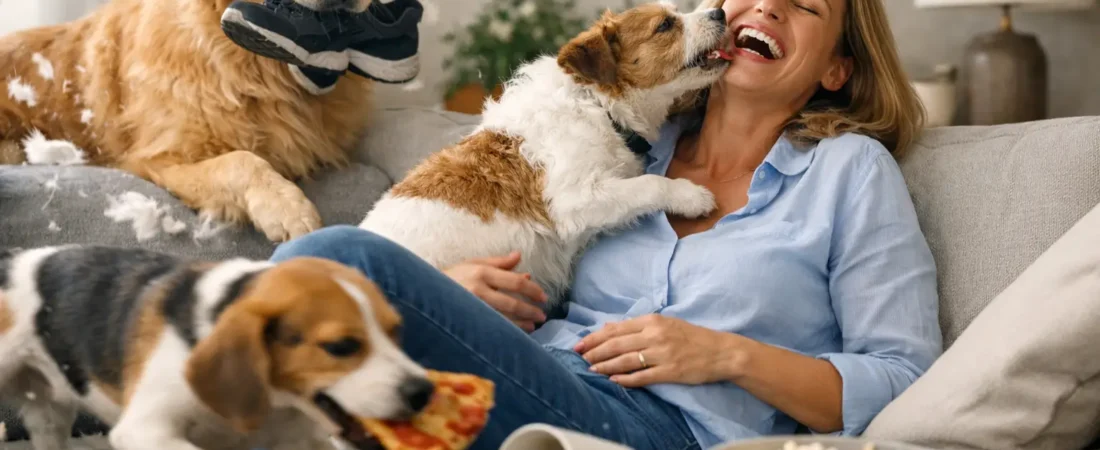
The shoe was not merely chewed. It was apparently cross-examined, disassembled, and left in seventeen damp pieces beneath the coffee table. Dog chaos stories begin exactly this way: with a pet parent staring at the scene, a dog pretending not to understand English, and one deeply suspicious sock on the floor.
We laugh because we have been there. The overturned laundry basket, the unauthorized counter-surfing operation, the 2 a.m. hallway sprint that sounds like a herd of tiny horses. But the best chaos stories do more than earn a group-chat reaction. They reveal the weird, wonderful rhythms of living with a creature who has strong opinions about cardboard, squirrels, and whether your personal space should exist.
Why Dog Chaos Stories Feel So Personal
A dog-related disaster is rarely just a disaster. It is a tiny domestic mystery with a very obvious suspect and absolutely no remorse. The defendant may be a Dachshund who excavated beneath the fence because the backyard clearly required a tunnel system. Or it may be a Standard Poodle who opened a pantry door and distributed pasta across three rooms like a very organized criminal.
These stories land because they shrink the gap between pet owners. One person has a Boxer who treats every delivery truck as a federal emergency. Another has a mixed-breed rescue who only steals items that have been left unattended for precisely eleven seconds. Different homes, same look of disbelief.
There is comfort in that recognition. Dogs make us adjust our routines, lower our standards for pristine upholstery, and learn the sound of trouble happening in another room. Sharing the story turns frustration into a familiar joke: the dog was not trying to ruin the day. The dog was conducting important research into the structural integrity of the trash can.
The courtroom framing makes the whole thing even better. A dog cannot explain why a bagel vanished from the counter, but a pet parent can submit Exhibit A: crumbs on the rug. Exhibit B: cream cheese on one eyebrow. Exhibit C: a witness who has suddenly become very interested in a wall.
The Case File Behind the Laugh
Funny behavior often has a plain, understandable cause. That does not make the behavior less ridiculous. It simply means a good pet parent can laugh at the evidence while looking for the pattern behind it.
Chaos can be communication
A bored dog may redecorate. A lonely dog may bark at every passing leaf. A young dog with too much energy may convert the living room into an indoor track meet. A clever herding breed, such as a Border Collie, may begin organizing household members when nobody has provided an actual job to do.
Dogs do not wake up plotting personal revenge over a late dinner, despite what the shredded remote-control casing suggests. They repeat actions that feel rewarding, relieve stress, burn energy, or get a big reaction. If tearing up tissues causes everyone to leap from the couch and shout, that is a surprisingly exciting event from the dog’s point of view.
This is where the humor needs a small dose of fairness. Calling a dog “guilty” is fun. Punishing a dog after you discover an old mess is not useful. Dogs connect consequences to what is happening right then, not to the evidence you found ten minutes ago. A stern lecture delivered beside a destroyed pillow mostly tells them that you are upset near pillows.
Instead, look for the circumstances. Did the chaos occur after a long day alone? During the loudest part of a thunderstorm? When the dog was denied access to the window-based neighborhood surveillance shift? The answer helps determine whether the solution is more exercise, more enrichment, better management, or support from a qualified trainer or veterinarian.
Some cases deserve more than a punchline
Not every messy moment is a behavior crisis. A puppy chewing a slipper, for example, is often an ordinary puppy with ordinary puppy teeth. A safe chew option, supervision, and keeping tempting items out of reach can resolve a great many footwear felonies.
Other changes deserve prompt attention. Sudden destructive behavior, frequent accidents in a reliably house-trained dog, intense separation distress, repeated attempts to escape, or eating nonfood items can point to stress, pain, illness, or a more serious behavior concern. If the behavior is new, escalating, or putting your dog at risk, call your veterinarian. The Court recognizes medical evidence as highly persuasive.
How to Turn a Household Incident Into a Better Routine
The most useful dog chaos stories have a before-and-after. Not a perfect ending, because dogs remain dogs and the occasional rogue paper towel will always be at risk. But there is usually a small adjustment that makes the next incident less likely.
Start with management. This is not cheating, and it is not admitting defeat. It is closing the pantry, using a covered trash can, placing shoes in a closet, and setting up a dog-safe room when you cannot supervise. A Great Dane who can reach the kitchen counter does not need moral instruction about roast chicken. He needs fewer opportunities to practice becoming a roast-chicken specialist.
Then make the good choice easier than the bad one. A food puzzle before you leave for work may give a busy dog an appropriate project. A sniff-heavy walk can tire some dogs more effectively than a rushed march around the block. A rotating selection of safe chews may save your furniture from becoming the afternoon’s featured exhibit.
Training matters, but it works best when it is specific and realistic. Teach “leave it” with low-stakes items before testing it beside a dropped sandwich. Practice “place” while the doorbell is quiet, not when your Bichon Frise is already sprinting through the house with a roll of toilet paper. Reward the behavior you want early and often, especially when your dog chooses calm without being asked.
It also helps to notice what kind of chaos your dog prefers. Some dogs are opportunists who need tighter household systems. Some are social performers who want attention. Some are working-minded dogs who need daily outlets for their brains. Breed tendencies can offer clues, but they are not a verdict. A laid-back Husky exists somewhere, presumably arguing about the description, and a tiny terrier may have the confidence of a much larger defendant.
The Joy of a Properly Documented Disaster
There is an art to telling these stories well. The goal is not to embarrass the dog or invite strangers to judge your home. It is to capture the absurdity with affection. A single photo of a guilty-looking face can be funny, but the strongest stories include the tiny details: the unopened dog toy beside the destroyed tax document, the lone noodle glued to the ceiling, the cat serving as an unimpressed eyewitness.
Keep the dog’s dignity in the record. Avoid posting content that shows a pet in real distress, being frightened, or put in danger for a laugh. The funniest pet content comes from normal, safe, recognizable mayhem, not from pushing an animal past its comfort zone. A surprise bath may be a hard no. A Corgi emerging from a laundry basket wearing one sock? Potentially admissible.
At Judge Fable Pet Court, the fictional verdict may be “guilty with snacks,” but the real spirit is kinder than that. Pet ownership is full of imperfect moments, interrupted plans, and messes that somehow become family lore. Years later, nobody remembers the exact cost of the replacement rug. They remember the dog standing in the middle of it, proudly wearing the evidence.
So document the harmless nonsense, secure the trash, and give your dog a better outlet before the next hearing. The house may never be fully under control, but a little prevention leaves more room to laugh when the inevitable case file arrives.