

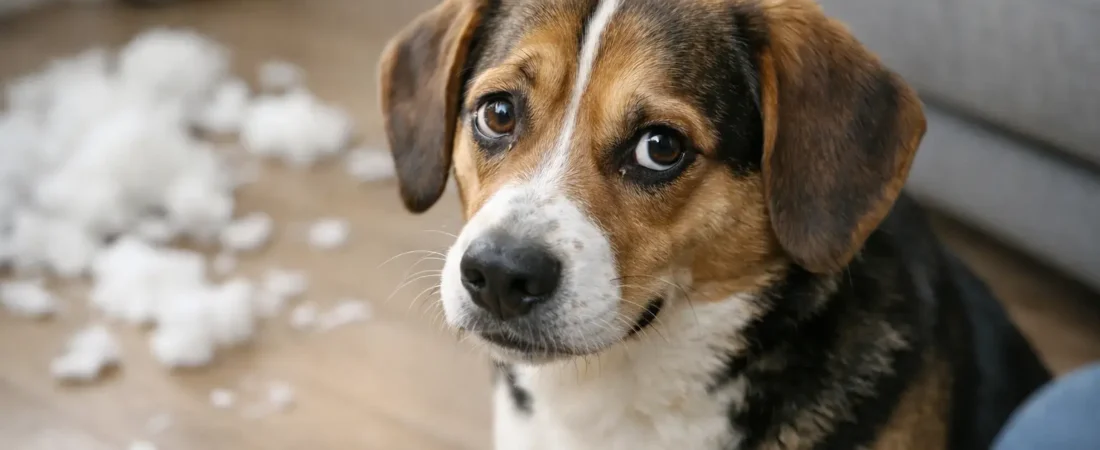
One shredded napkin. One suspiciously silent living room. One dog frozen in the doorway wearing the full funny guilty dog face, as if the court reporter has already sworn him in. Pet owners know the look instantly – lowered head, soft eyes, tucked posture, maybe a tiny side glance that says, “I would like legal counsel.” The only question is whether your dog actually feels guilt, or just knows the evidence is bad.
The short ruling is this: dogs probably are not confessing to a moral crime the way humans do. That famous expression is more likely a response to your tone, posture, and the general vibe that a trial is about to begin. Still, the look is real, it is funny, and it tells you something useful about how your dog reads you.
What the funny guilty dog face really means
The funny guilty dog face is usually a cluster of appeasement behaviors. Your dog is noticing tension and trying to lower it. A lowered body, ears back, avoiding direct eye contact, lip licking, a slow tail wag, or a crouched posture can all be part of that response.
That matters because many owners assume the face proves their dog understands the exact act in question. Usually, it does not. If you walk into the kitchen, gasp at the tipped-over trash can, and your dog shrinks back, your dog may be reacting to your expression and voice more than mentally replaying the turkey sandwich theft.
This is where the case gets interesting. Dogs are excellent observers of human behavior. They learn patterns fast. If crumpled paper on the floor tends to lead to a stern voice, they may offer calming signals before you say much at all. From your point of view, it looks like guilt. From your dog’s point of view, it may be damage control.
Are dogs actually guilty or just reading the room?
Most behavior experts land on the same side of the bench: what people call “guilt” in dogs is more likely anticipation of a negative reaction. Dogs absolutely have emotions. They can feel fear, excitement, affection, frustration, and stress. But guilt, in the human sense, involves a more complex awareness of having broken a rule and feeling remorse about it later.
That is a high bar. Dogs are more immediate than that. They connect actions and consequences best when those things happen close together. If your dog chewed a shoe two hours ago and now gives you the face when you hold up the soggy remains, your dog is unlikely to be reflecting on the earlier decision with deep regret. Your dog is probably responding to your present-day disappointment.
That does not make the moment fake. It just means the emotion is different from the one we tend to assign to it. Think less “I have violated the household code” and more “the tall ape sounds upset, and I would prefer peace.”
Why owners love that expression so much
Frankly, the defense rests on charisma. The funny guilty dog face is irresistible because it feels relatable. We see a sheepish expression and map human feelings onto it. That is part of what makes dogs so lovable. They are expressive enough that we feel like we are in a relationship with a tiny furry roommate who keeps making poor choices around bread.
There is also a comic timing element. Dogs rarely look “guilty” at random. The face tends to appear exactly when something ridiculous has happened – couch stuffing on the rug, a missing burrito, one sock left to tell the tale. The contrast between the crime and the solemn look is what makes it meme material.
And yes, some dogs seem especially gifted at it. Certain individuals are dramatic performers. Whether they are truly more sensitive or just more expressive depends on the dog. Either way, some defendants know how to work the jury.
What creates the look in the first place
A guilty-looking expression can be shaped by several things at once. Your dog’s personality matters. A softer, more conflict-avoidant dog may show appeasement behaviors quickly. Past experience matters too. If scolding has happened before, the posture may appear faster and more intensely.
Your own behavior is a major factor. Dogs pick up on eye contact, stillness, sharp movement, changes in pitch, and facial tension. Even walking toward a mess with that very specific “who did this” energy can trigger the response.
Context matters as well. A dog who raids the trash because he is bored, under-exercised, or highly food-motivated may not understand the household rule. He may just know that human displeasure often follows the fun part.
Should you scold a dog wearing the guilty face?
The court advises caution. Scolding after the fact is usually not very effective, especially if you did not catch the behavior in the moment. Dogs do not reliably connect your delayed reaction to the earlier act. What they do connect is you being intense while they stand near a mess.
That can create confusion or anxiety without solving the behavior. In some dogs, it can even make them more sneaky. Not sneakier about the original offense in a mastermind sense – just more likely to avoid you when something bad has happened.
If you come home to chaos, the better move is management and prevention. Clean it up, take note of what was accessible, and ask what set your dog up for success or failure. Was the trash covered? Was the dog under-stimulated? Was tempting food left in reach? Good verdicts look forward, not backward.
How to respond when your dog gives the funny guilty dog face
Start by lowering the emotional temperature. If your dog is crouching or avoiding you, keep your voice calm and your body relaxed. There is no prize for delivering a dramatic closing argument to a bewildered beagle.
Then address the actual issue. If your dog stole food, secure food better. If your dog chewed something, swap in legal chew options and supervise more closely. If the behavior keeps happening, build training around the situation rather than reacting to the aftermath.
For example, a dog who counter-surfs may need stronger stationing skills, better kitchen boundaries, and less opportunity to rehearse the behavior. A dog who shreds paper may need more enrichment, more exercise, or a safer outlet for tearing. The “guilty” look is not the problem. It is a clue that your dog noticed your reaction.
The line between funny and stressed
Most guilty-face moments are harmlessly silly, but it is worth noticing when a dog looks more than sheepish. If the body language includes trembling, tail tightly tucked, cowering, hiding, or refusal to approach, that is less comedy and more stress.
At that point, the concern is not whether your dog feels guilt. It is whether your home interactions have become too tense around mistakes. Dogs learn best when they feel safe enough to engage. If your dog seems fearful during these moments, shift away from correction-heavy responses and toward prevention, positive reinforcement, and clearer routines.
If the behavior problems are frequent or intense, bringing in a qualified trainer can help. Especially if the “crime spree” includes resource guarding, separation issues, or destructive behavior rooted in anxiety, the facts of the case may be more complicated than simple mischief.
Why this matters beyond a good laugh
Understanding the funny guilty dog face changes how you handle everyday dog chaos. It keeps you from assuming your dog is being manipulative, stubborn, or spiteful. Those labels are popular, but they are rarely accurate and usually not helpful.
It also makes you a better observer. Instead of asking, “Does he know he was bad?” ask, “What is he responding to right now?” That small shift leads to better training decisions, less frustration, and fewer household retrials.
And honestly, it protects the joy of living with a dog. The best pet ownership moments are not built on courtroom drama alone. They come from learning how your dog thinks, setting reasonable expectations, and laughing when your household witness has peanut butter on his nose and still pleads innocence.
Judge Fable would likely note that the defendant appears remorseful, but the court remains unconvinced that he understands the full scope of his sandwich-related offenses. What is clear is this: the face is communication, not confession.
The next time your dog presents that legendary expression, enjoy the comedy, skip the lecture, and look at the setup. A calmer response today usually means fewer offenses tomorrow – and far less repeat business before the bench.