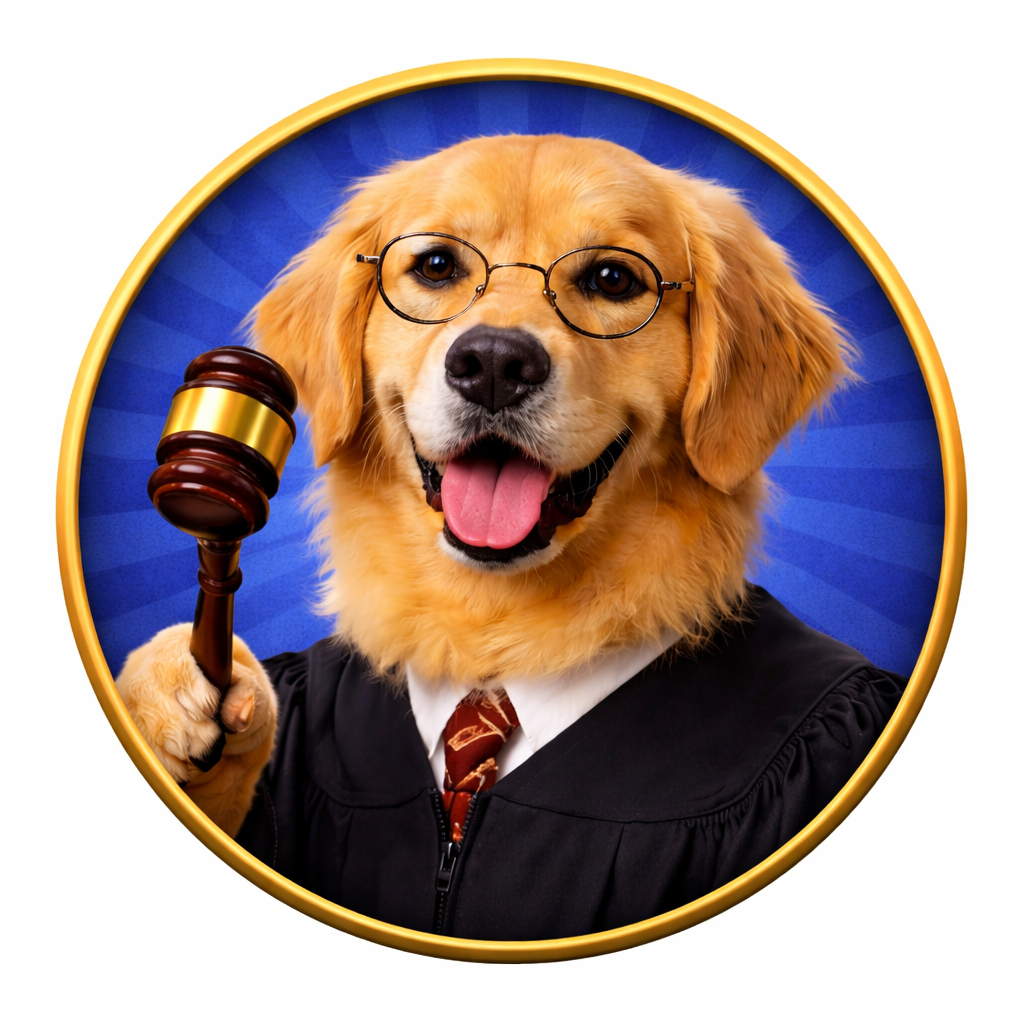


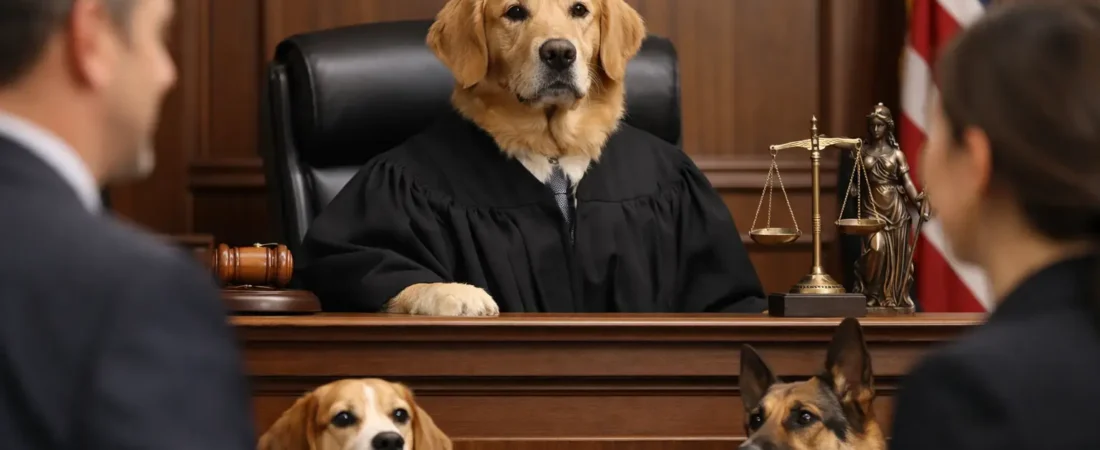
A good dog courtroom lives or dies on one thing – whether the chaos feels familiar. Not generic “dogs are silly” chaos, but the highly specific crime of stealing one sock, ignoring the expensive toy, and sprinting laps through the living room at 9:14 p.m. The best dog courtroom content works because pet owners instantly recognize the defendant.
That is the whole appeal. A courtroom frame turns ordinary dog behavior into a running bit with structure, stakes, and a verdict. Suddenly, counter surfing becomes Exhibit A. Muddy paw prints become photographic evidence. The suspiciously innocent face becomes testimony the jury absolutely does not trust.
What makes a dog courtroom funny
A dog courtroom works when the joke has two layers. First, the behavior itself is relatable. Second, the response is wildly overqualified for the offense. Treating a shredded paper towel roll like a major legal proceeding is the point.
The tension is what makes it land. The dog is doing normal dog things. The humans are acting like they are handling a case of national importance. That contrast gives the format legs far beyond a single meme or caption.
It also helps that the structure is instantly readable. People understand judges, verdicts, evidence, witnesses, and cross-examination without needing any setup. You can make the format as simple as one photo with a caption, or as elaborate as a recurring series with charges, exhibits, and sentencing.
Dog courtroom format ideas for content
If you are building dog courtroom content for a brand, social page, or just your own entertainment, the format should match the platform and the amount of effort you can sustain. A funny concept stops being funny fast if every post requires a costume department and three hours of editing.
The quick-case format
This is the easiest version to maintain. Start with a photo of the dog looking either guilty or offensively confident. Add a short case title, one charge, one piece of evidence, and one verdict.
For example, the charge might be unlawful acquisition of rotisserie chicken. The evidence is a grease spot on the snout. The verdict is guilty, but very cute. This format works because it is fast, repeatable, and easy for followers to share.
The evidence-board format
This version leans harder into the bit. Use a few images or details from the “incident” and present them like a prosecution file. One image shows the destroyed pillow. Another shows the defendant asleep beside it. A third is the close-up of one feather attached to the eyebrow.
This style gives people more to scan and can work especially well for carousels or blog-style posts. It also lets you stretch one moment into a full mini-story without overexplaining it.
The courtroom transcript format
This is great if your audience likes punchy writing. Write the scene like a hearing.
The bailiff announces the case. The defendant refuses to sit. Counsel for the defense argues that the steak was left “within tempting distance.” The judge asks why there are six holes in the yard and receives no meaningful answer.
The upside is voice. The downside is that it relies more on writing than visuals, so it works best when the humor is sharp and the behavior is specific.
How to make the joke feel fresh
The biggest risk with any dog courtroom concept is repetition. If every case is just “dog stole food” with a new hat on, the audience gets the idea and moves on.
The fix is variety in the charges, not just the wording. Pull from the full range of dog-owner life. There are household crimes, social crimes, emotional crimes, and crimes against sleep.
A dog can be charged with reckless zoomies, first-degree blanket theft, suspicious barking at a leaf, destruction of one remote control, impersonating a starving animal immediately after dinner, and conspiracy to avoid bath time. Different categories keep the format from going stale.
You can also vary the legal angle. Sometimes the dog is clearly guilty. Sometimes the evidence is weak. Sometimes the cat is a hostile witness. Sometimes the owner should probably be charged for leaving a sandwich unattended. A little uncertainty makes the fake legal world feel more alive.
The best dog courtroom cases are rooted in real behavior
This is where the format becomes more than a joke. A strong dog courtroom does not just make fun of dogs. It translates common behavior into language people want to share because it feels true.
Counter surfing, chewing, barking, digging, stealing laundry, demanding lap access from a body that is seventy pounds too large – these all work because owners have lived them. But the smartest version of the format also understands why the behavior happens.
A dog that steals socks may like the scent, the texture, or the chase that follows. A dog that suddenly starts shredding couch cushions may be bored, underexercised, anxious, teething, or just very committed to interior redesign. The humor gets better when the writer knows the difference between mischief and unmet needs.
That does not mean every post should turn into a training lecture. It does mean the best content avoids sounding mean. The dog is the defendant, yes, but the court recognizes mitigating circumstances.
Dog courtroom humor works best with a little truth
If you are writing educational pet content around a dog courtroom theme, the sweet spot is entertainment first, usefulness second. Give readers the laugh, then quietly give them something they can use.
Take barking, for example. A funny case might accuse the dog of filing repeated noise complaints against the mail carrier. But the useful layer explains that alert barking is normal and often reinforced because the dog thinks the barking made the person leave. That tiny bit of context makes the joke smarter and the content more valuable.
The same goes for chewing. You can present a sneaker as Exhibit A and still mention that dogs often need better chew options, more enrichment, or a little management while they learn. The humor opens the door. The practical insight is what keeps people reading.
Judge Fable Pet Court sits in that sweet spot especially well because the courtroom device is strong enough to entertain, but flexible enough to carry genuinely helpful advice without becoming stiff.
Props and visuals for a dog courtroom
A dog courtroom does not need much to read clearly. In fact, too many props can make it feel forced. One or two visual cues are usually enough.
A tiny gavel, a serious backdrop, a nameplate, or a staged “evidence” photo can do the job. The dog does not need a full costume unless the dog genuinely tolerates it well. Once the pet looks uncomfortable, the joke is over.
It is usually smarter to let expression carry the scene. A side-eye, a turned head, a yawn in the middle of sentencing – those moments are funnier than an elaborate setup. Real reactions beat overproduction almost every time.
The same rule applies to writing. You do not need fifteen legal puns in one paragraph. A few well-placed phrases like “the court finds” or “the defendant maintains innocence” are enough. The voice should feel confident, not desperate.
When a dog courtroom joke misses
Not every behavior should be framed as a cute offense. If a dog is showing signs of fear, pain, severe anxiety, aggression, or sudden behavior changes, that is not courtroom comedy material. That is a cue to take the behavior seriously.
This is where tone matters. Pet owners want to laugh, but they also want to feel that the brand understands real life with animals. If a dog destroys a crate because of panic, that is different from stealing a pizza crust off the coffee table. One is a joke. One may need training support, management changes, or a veterinary conversation.
That distinction actually strengthens the brand voice. The court may be theatrical, but it is not clueless.
Why the dog courtroom format keeps getting shared
People share dog courtroom content because it gives them a script for their own lives. Instead of saying, “My dog ate the bread again,” they can say, “The defendant stands accused of repeat carbohydrate offenses.” That is more fun, more memorable, and much easier to send to a friend.
It also invites participation. Owners can submit charges, evidence, and verdict suggestions from their own homes. That turns passive scrolling into community behavior, which is where a concept starts becoming a real content engine instead of a one-off joke.
And unlike trend-based humor, a dog courtroom has room to grow. You can create recurring charges, seasonal cases, holiday hearings, notorious repeat offenders, and even courtroom records for the most frequent crimes. The format is stable, but the material is endless because dogs keep giving the court new business.
If you want a dog courtroom that lasts, treat the joke like a structure, not a gimmick. Keep the cases specific, keep the voice sharp, and keep the affection obvious. Every good court needs order, but this one runs on lovable disorder.