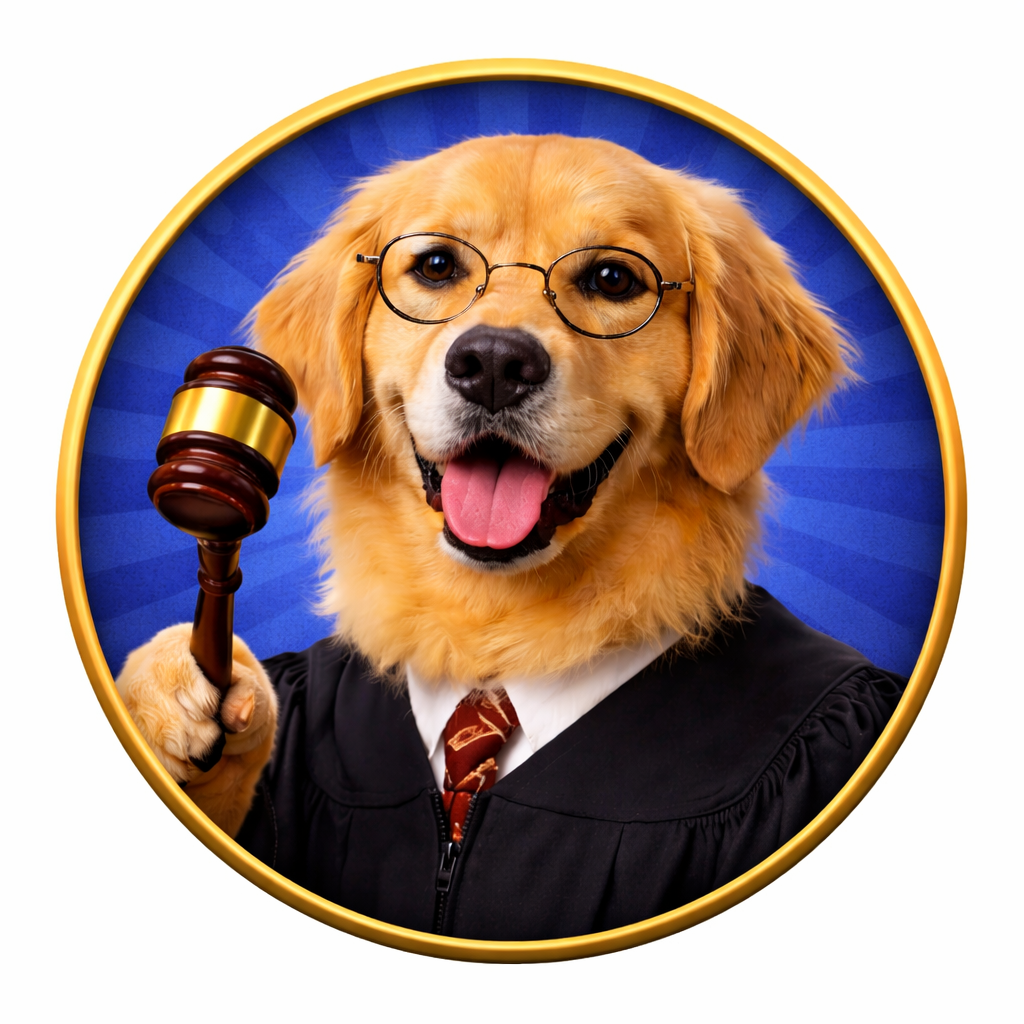



The treat jar is open. The kitchen is silent. Your dachshund is standing perfectly still beneath a suspiciously empty counter, crumbs on his nose and absolutely no legal representation. Learning how to narrate dog antics means recognizing that the funny part is rarely just what your dog did. It is the tiny, wildly confident details around the crime.
A good pet story turns a familiar mess into a scene people can picture. A great one gives the accused a motive, presents the evidence, and lets the reader reach the obvious verdict: guilty, adorable, and somehow still entitled to a snack.
Start With the Actual Offense
Do not begin with, “My dog was funny today.” That is not a case file. Start where the peace was disrupted.
Maybe your Australian Shepherd dragged every throw pillow into one precise pile while you answered a work call. Maybe the Boxer held a seven-minute oral argument with the delivery driver through the front window. Maybe a tiny mixed-breed defendant came running from the bathroom wearing a ribbon of toilet paper like a ceremonial sash.
Specificity does the heavy lifting. Name the object, the location, and the strange choice your dog made. “Luna stole a shoe” is serviceable. “Luna selected one expensive running shoe, carried it to the backyard, and buried it beside the tomatoes” gives us motive, setting, and a deeply troubling pattern of conduct.
The best antics are ordinary dog behavior viewed at the proper angle. Dogs investigate, scavenge, bark, dig, herd, shred, sprint, and claim furniture they did not purchase. Your narration is what makes the household incident feel like a headline.
How to Narrate Dog Antics With a Clear Story Arc
You do not need a long post to tell a satisfying dog story. Most good captions, videos, and family-group-text reports follow a simple progression: normal life, suspicious behavior, discovery, and aftermath.
Establish the innocent scene
Give readers one grounding detail before chaos arrives. The house was quiet. The groceries had just been put away. You stepped outside for exactly two minutes. Your dog was allegedly “resting.” This creates contrast, which is where comedy starts sharpening its little teeth.
For example: “I left Mabel, a Great Pyrenees mix, alone with a freshly folded basket of laundry while I signed for a package.” The reader already knows Mabel is about to make an executive decision.
Reveal the evidence
Then show what changed. Avoid vague phrases like “she made a mess” when you can provide physical proof: a single sock on the ceiling fan, kibble distributed across three rooms, a wet paw print on the white sofa, or a couch cushion relocated to the yard.
Evidence also reveals personality. A Border Collie who puts all the shoes in a neat line has committed a different offense from a terrier who has reduced one slipper to confetti. Same category of mischief. Very different defendant.
End on the reaction or ruling
The final beat is often the funniest. It may be your dog’s face when caught, your own defeated response, or a mock-formal verdict.
“Upon being confronted, Mabel sat beside the laundry pile and offered one paw. The court recognizes this as a plea bargain.”
That ending gives the story a button. Without it, a funny incident can read like a report from the Department of Missing Household Items.
Give Your Dog a Motive, Not a Human Biography
Personifying dogs is the joy of the exercise, but the strongest narration keeps one paw in reality. Your Husky did not truly object to municipal zoning laws. He may, however, have had a dramatic opinion about being denied access to the snow-covered porch.
Use motives that exaggerate real dog instincts: hunger, boredom, curiosity, territorial concern, a desire to participate, or the firm belief that your sandwich was a shared asset. A scent hound opening the pantry is not a criminal mastermind. She is a nose with a retirement plan.
This balance matters. If every post says your dog is “planning revenge,” the joke gets repetitive. Rotate the framing. One day the defendant is an overconfident food critic. Another day they are a self-appointed security officer, interior designer, union organizer, or quality-control inspector.
A Shih Tzu staring at a vacuum may be conducting an audit. A Standard Poodle carrying a sock from room to room may be protecting a delicate legal document. A Catahoula mix who leaps into the car before anyone says “ride” has simply arrived for a hearing he was never summoned to attend.
Use Mock Courtroom Language Sparingly
Courtroom framing can turn everyday pet chaos into a recurring bit, especially if your followers know the rules of your little universe. But a story should still be understandable to someone encountering it for the first time.
Choose a few legal phrases and let them land: “Exhibit A,” “the defendant,” “under cross-examination,” “motive,” “sentence,” or “case dismissed.” One or two is usually plenty. A caption crammed with legal terms can sound like the dog ate a law textbook and you followed suit.
At Judge Fable Pet Court, the joke works because judicial seriousness meets evidence that is objectively unserious. A Bichon Frise covered in toilet paper does not need a complicated plot. The visual is Exhibit A. The narration simply raises the stakes: “The defendant claims she entered the bathroom to inspect plumbing. The jury has reviewed the paper trail.”
Deadpan wording makes silly details funnier. Describe a zoomie outbreak as “an unauthorized high-speed hallway demonstration.” Call a half-chewed remote “material evidence.” Refer to a dog sleeping on fresh laundry as “failure to vacate the premises.” The calmer the voice, the better the contrast.
Let the Details Match the Dog
Breed-aware details make an anecdote feel observed rather than copied from a meme account. That does not mean every German Shepherd must be on patrol or every Chihuahua must be feisty. Individual dogs have individual habits, and a breed is a clue, not a verdict.
Still, natural tendencies can add texture. A scent-driven dog may follow a dropped crumb with the concentration of a detective. A high-energy herding breed may attempt to organize children, cats, and visiting relatives into a more efficient formation. A giant breed may create havoc without moving quickly at all – a Great Dane backing into a coffee table can generate more evidence than a terrier on a full zoomie circuit.
If you do not know your dog’s breed mix, focus on the habit you know best. Does she steal only left shoes? Does he bark at the ice maker but not the blender? Does your senior dog wait until you sit down before requesting a snack? Those peculiar patterns are richer than generic labels.
Build Comedy With Timing
Timing is the difference between a story that gets a polite heart and one that gets forwarded to every dog person in the family. Put the visual surprise early. Save your funniest phrase for the end. Do not explain the joke twice.
For short-form video, show the evidence before offering the charge. A two-second shot of a guilty-looking Pug next to an overturned plant creates instant curiosity. Then add a simple line: “Defendant claims the fern fell during a routine inspection.”
For a written caption, lead with the most incriminating fact. “My dog opened the fridge, removed one tortilla, and took it upstairs.” Readers will continue because they need to know why there was a tortilla upstairs. Often, you do not need to answer. Mystery is part of the record.
Keep sentences brisk when the action is fast. When the incident is especially absurd, slow down for one dry, formal sentence. “At 3:14 p.m., the accused was located behind the recliner with a rotisserie chicken carcass and no further comment.”
Know When to Put the Joke Aside
Not every behavior should become content. If your dog is showing fear, aggression, separation distress, destructive behavior that could cause injury, or a sudden change in appetite or energy, the priority is care and support, not a clever verdict. A dog who destroys a pillow during a thunderstorm may need comfort and behavior help, not public prosecution.
Even harmless mischief benefits from a little context. Never encourage followers to recreate a dangerous stunt for a laugh, and skip food jokes involving items that could harm dogs. The funniest stories feel affectionate because the dog is safe, understood, and clearly loved after court adjourns.
The next time you find a suspicious trail of stuffing, a mysteriously relocated sandwich, or a dog asleep in the one place he was explicitly forbidden to be, pause before cleaning up. Take in the evidence. Notice the expression. Then tell the story with the kind of straight-faced respect such a distinguished repeat offender deserves.