

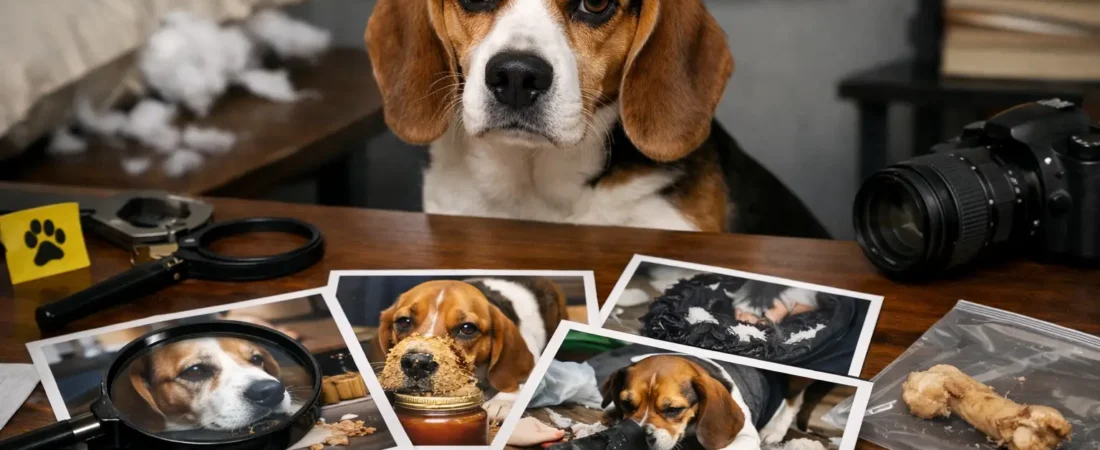
Some photos don’t need a caption. A torn-up pillow on the floor, one suspiciously fluffy snout, and a dog sitting three feet away with the face of a very bad liar – that’s the entire case file. Funny dog evidence photos work because they capture the exact moment a household crime becomes a comedy trial, and every dog owner instantly recognizes the defendant.
That recognition is the whole appeal. These images are not just random cute pet pictures. They are tiny visual stories with a clear setup, a likely culprit, and just enough plausible deniability to make the joke better. If you have ever looked at your dog, looked at the shredded paper towels, and thought, The court will be hearing this matter immediately, you already understand why this format gets shared so much.
Why funny dog evidence photos are so satisfying
The best ones have structure. There is usually a scene of destruction, a visible clue, and a dog whose expression somehow suggests innocence, regret, confusion, or open contempt for the judicial process. That combination makes the image feel complete in a second, which matters online. People do not stop scrolling for a vague joke. They stop for a clear one.
There is also a strong relatability factor. Nearly every dog owner has lived through a snack theft, a mystery puddle, a couch cushion incident, or a suspicious silence followed by consequences. A good evidence photo says, your dog does this too, huh? That shared experience is what turns a private annoyance into public entertainment.
And then there is the face. Dogs have an unfair advantage in comedy because their expressions read like human reactions even when we know better. A side-eye near the trash can feels like testimony. A frosting-covered nose feels like a confession. The humor lives in that gap between what happened and what we imagine the dog would say in court.
What makes a funny dog evidence photo actually funny
A lot of pet photos are cute. Fewer are funny on purpose. The difference usually comes down to context.
The scene needs clear evidence
A single guilty-looking dog on a clean rug is just a portrait. Add a destroyed slipper, a trail of stuffing, or an empty bag of hamburger buns, and now we have a case. The visual clue matters because it gives the joke a charge sheet. Viewers should understand the alleged crime immediately.
That does not mean the mess has to be huge. Some of the best photos are small and specific – one chewed corner of a homework page, one stolen sock, one donut box left tragically open. Smaller disasters can be funnier because they feel more plausible and more familiar.
The dog must be part of the frame
This seems obvious, yet it is where many photos lose the plot. If the evidence is in one picture and the dog is in another, the comedic tension disappears. You want the defendant and the evidence in the same frame whenever possible. It lets the viewer act as judge and jury in half a second.
Distance matters too. If the dog is too far from the scene, the joke gets weaker. A dog sitting next to the overturned trash can is funnier than a dog photographed later in another room pretending to have an alibi.
Expression helps, but timing matters more
People chase the so-called guilty look, but not every great evidence photo needs one. Some dogs look sincerely ashamed. Others look proud. Others look offended that their art installation is being criticized. All of those can work.
What matters more is timing. Catch the aftermath while the clues are fresh. Crumbs on the muzzle, fluff on the tail, an object still in the mouth – these details make the image feel immediate. That is what elevates it from a pet pic to Exhibit A.
How to take better funny dog evidence photos at home
You do not need studio lighting or a ring light worthy of a celebrity deposition. You just need speed, decent framing, and the good sense to secure anything actually dangerous before you start documenting the crime scene.
Prioritize safety before comedy
If your dog got into chocolate, medication, sharp plastic, cooked bones, or anything genuinely risky, put the camera down and handle the situation first. A funny photo is never worth delaying real care. The court recognizes medical exceptions.
For harmless household mischief, though, you can move quickly without turning it into a whole production. Clear away hazards, then grab your phone.
Shoot first, stage less
The funniest moments usually look funny because they are real. If you spend too long repositioning the dog or arranging the evidence, the image starts to feel forced. Get a few fast shots from different angles while the dog is still near the scene.
Natural aftermath beats overworked setup almost every time. Viewers can tell when a dog wandered into a staged mess and has no idea why it is being accused.
Use the room, not just the dog
Show enough of the environment to explain what happened. Include the open pantry, the empty pizza box, the toppled laundry basket, or the couch corner that clearly lost the fight. Context is the punchline’s best witness.
Try crouching to your dog’s level instead of shooting from above. That angle often feels more immersive and puts the dog in the center of the story rather than making the photo look like surveillance footage from a disappointed parent.
Take several versions quickly
One wide shot establishes the crime scene. One closer shot highlights the incriminating details. One portrait catches the defendant’s reaction. That trio gives you options, especially if you want to post a carousel or choose the single image with the strongest comedic payoff.
The role of captions in funny dog evidence photos
A strong photo can stand on its own, but a sharp caption can turn a good post into a shared one. The trick is not explaining the joke too hard. If the image already shows a dog beside a burst bag of treats, you do not need a paragraph describing what everyone can see.
Short mock-legal phrasing usually works because it adds structure without adding clutter. Think in charges, rulings, objections, and suspicious statements. Dry language makes the absurdity land harder. “Defendant denies all allegations despite turkey on face” is funnier than a long story about how your dog definitely ate the sandwich.
It also helps to match the tone to the dog’s expression. A proud-looking thief needs a different caption than a wide-eyed first-time offender. One is a career criminal. The other is a panicked intern who made one bad choice near a birthday cake.
Why these photos perform so well on social media
Funny dog evidence photos are easy to understand, easy to share, and easy to comment on. That combination matters more than people think.
First, they have instant readability. You do not need sound, backstory, or special knowledge. The scene is obvious. Second, they invite participation. People love leaving comments as if they are attorneys, witnesses, or character references. Third, they create gentle tribalism among pet owners. Cat people may enjoy them, but dog people feel especially seen by them.
There is also a low-stakes emotional payoff. The behavior is naughty, but the framing is affectionate. Nobody is really angry. The joke says, yes, this was annoying, but now it is funny. That emotional conversion is deeply shareable because it helps owners laugh at the chaos instead of stewing in it.
When the joke works – and when it doesn’t
There is a difference between relatable mischief and content that makes viewers uneasy. If the dog looks terrified, cornered, or heavily scolded, the humor falls apart. People like these photos because the tone is light. The dog should look safe, not shamed.
The same goes for repeated destruction that points to a bigger issue. A chewed napkin is one thing. Chronic crate damage, serious separation anxiety behavior, or ingestion of dangerous objects is another. Sometimes the funniest “evidence” is also evidence that a dog needs more enrichment, supervision, training, or a conversation with a vet or behavior professional.
That trade-off matters. Humor is great for normal pet chaos, but it should not mask stress, boredom, or risk. The court appreciates a joke, but it also respects context.
Turning everyday chaos into a better photo habit
If your dog is a repeat offender, it helps to keep your phone ready and your expectations realistic. You are not waiting for cinematic perfection. You are watching for those small moments where evidence, expression, and timing line up.
You may also notice patterns. The same dog who steals napkins never touches shoes. The sock thief always leaves one behind. The treat burglar somehow opens only the loudest package in the house. These details make future photos better because you start anticipating the setup instead of reacting too late.
This is part of why brands like Judge Fable Pet Court resonate. Pet owners do not just want random cute content. They want recognizable crimes, visual receipts, and a verdict that says their household is not the only one running a very loose legal system.
Funny dog evidence photos are at their best when they preserve a moment you would otherwise clean up and forget. A minute later, the stuffing is in the trash and the dog is asleep in a patch of sun, acquitted by cuteness once again. But the photo remains, ready to remind you that living with a dog means sharing your home with a very charming suspect.