

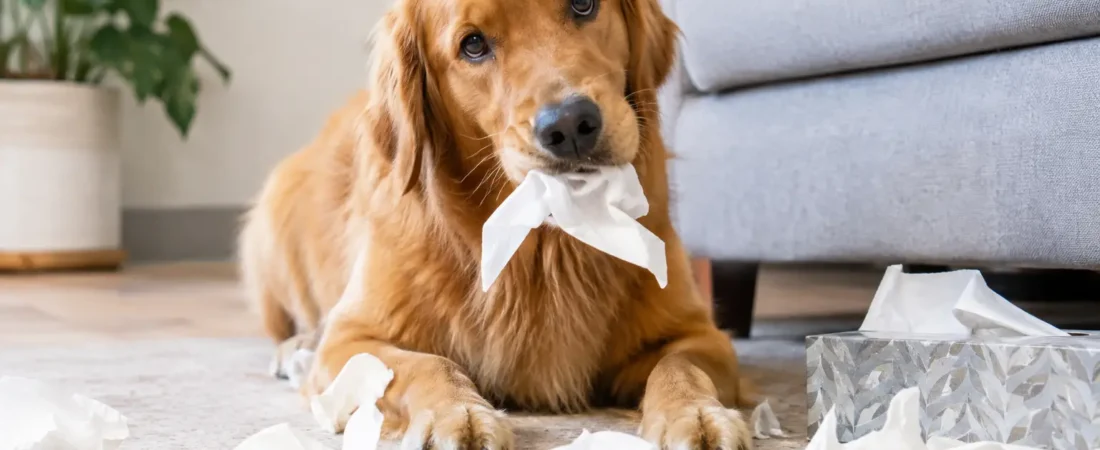
The living room is silent. Then you find a trail of stuffing, one suspiciously pleased dog, and the unmistakable remains of a throw pillow. The best examples of dogs caught redhanded are funny because the evidence is so spectacularly obvious. The useful part, however, is figuring out what motivated the misdemeanor before the next hearing.
Judge Fable Pet Court recognizes that most canine crimes are not crimes at all. They are usually boredom, opportunity, anxiety, hunger, excitement, or a dog making a perfectly logical decision with decidedly unhelpful paws. Here are 12 familiar cases, plus the kind response that can keep your household from becoming a repeat-offender facility.
12 examples of dogs caught redhanded
1. The Dachshund and the couch excavation
A Dachshund stands beside the couch with a blanket bunched into a dramatic mountain and a tunnel-shaped trench beneath it. The defendant claims he was merely improving the architecture.
Digging and burrowing are deeply satisfying for many dogs, especially breeds developed to work underground. Rather than scolding after the fact, give a determined digger a designated outlet: a snuffle mat, supervised digging box, or blankets arranged for safe burrowing. If couch digging happens when you leave, also consider whether separation stress or under-stimulation is involved.
2. The Husky who argues with the evidence
The trash can is overturned. A banana peel is stuck to one paw. The Husky responds to questioning with a full closing argument, including several operatic objections.
Trash raids are rewarding because they often pay off with food. Prevention wins this case: use a lidded can behind a cabinet door, keep counters clear, and make sure everyone in the house follows the same rules. A dog-proof setup is not surrender. It is competent courtroom security.
3. The Border Collie who reorganized the laundry
Every sock has been removed from the basket and placed across three rooms with apparent precision. No socks are damaged. The Border Collie sits nearby, awaiting praise for operational excellence.
Some dogs do not need more physical exercise so much as they need a job for their brains. Short training sessions, scent games, food puzzles, and teaching useful cues such as “find it” or “put away” can help channel that urge to organize the universe. Mental work can tire a clever dog more effectively than another lap around the block.
4. The Bichon Frise in toilet paper formalwear
The bathroom door was left open for two minutes. Now the Bichon Frise is covered in toilet paper, and the roll has become a very long, very festive runway.
Paper shredding gives many dogs a fun combination of texture, noise, and movement. Keep bathroom doors closed and provide legal shredding options, such as a cardboard box with treats tucked inside, provided your dog is supervised and does not swallow the material. If your dog consumes paper, fabric, or other nonfood items, skip the comedy and call your veterinarian for guidance.
5. The Great Dane sitting on the evidence
A Great Dane has somehow taken one bite from a sandwich, then parked his entire body on the remaining evidence. Nobody can recover the exhibit without a crane and a cheese-based negotiation.
Counter surfing is usually a management issue before it becomes a training issue. Food left within reach is an invitation, particularly for a tall dog. Teach a reliable place cue, reward your dog for staying on a bed while meals are prepared, and avoid leaving tempting food unattended. Do not chase a dog who grabs food – that can turn theft into a thrilling game.
6. The Boxer versus the delivery driver
A package appears at the door. The Boxer launches a loud, passionate defense of the property, then proudly retrieves a slipper in case further action is needed.
Alert barking can be normal, but nonstop barking is exhausting for dogs and people. Practice a simple routine when the doorbell rings: reward your dog for moving to a mat, offer a chew, and keep greetings calm. Window film or closing curtains can reduce visual triggers if your dog patrols every passing squirrel, stroller, and mail truck.
7. The mixed-breed snack bandit
The pantry door is ajar. A small mixed-breed dog is standing inside a cereal box like a furry magician caught halfway through a disappearing act.
A food-motivated dog is not being spiteful. They are exploiting an unsecured resource with admirable persistence. Store food in closed cabinets or containers, feed consistent meals, and give high-value chews when you need to cook or unload groceries. If food obsession seems sudden or extreme, discuss it with your veterinarian, especially if it comes with weight or behavior changes.
8. The Standard Poodle and the muddy rug
The yard is wet, the back door was opened, and the formerly cream-colored rug now displays a series of elegant paw-print signatures. The Standard Poodle appears delighted with the new interior design.
Dogs do not naturally understand that mud belongs outdoors. Make the better choice easy: keep a towel by the door, use a washable runner, and practice a cheerful pause cue before your dog enters. Reward four paws on the mat, then wipe paws without turning the process into a wrestling match. Consistency matters more than a stern lecture delivered after the rug has dried.
9. The Corgi and the forbidden remote
The remote control is missing. The Corgi is lying under the coffee table, calmly chewing something with buttons. Court records show this is the third remote this year.
Chewing can be normal, soothing, and necessary, especially for puppies and adolescents. The key is offering appropriate alternatives that are at least as satisfying as the remote. Rotate durable chews, puppy-safe toys, and stuffed food toys, and keep tempting objects out of reach. If destructive chewing is sudden, intense, or paired with distress when alone, a qualified trainer or veterinary behavior professional can help identify the cause.
10. The Australian Shepherd who stole the garden hose
The hose is running, the yard is flooding, and the Australian Shepherd is racing victory laps with the nozzle. This defendant has clearly appointed herself director of water-based recreation.
Chasing water can be irresistible, but hoses and sprinklers can create obsessive patterns for some dogs. Let water play be brief and structured, then redirect to fetch, scent work, or a tug toy. It depends on the individual dog: a few joyful minutes may be harmless, while frantic fixation is a sign to choose calmer enrichment.
11. The Chihuahua in the handbag
A Chihuahua has climbed into an open handbag and removed exactly one granola bar, a lip balm, and a receipt. The prosecution cannot explain why the receipt was shredded. The defendant declines comment.
Small dogs are often underestimated as household investigators because they can disappear into surprising places. Keep bags zipped and off the floor, especially if they contain medication, gum, chocolate, or xylitol-containing products. If your dog gets into a potentially toxic item, contact your veterinarian or a pet poison resource immediately rather than waiting for symptoms.
12. The Labrador mix with the guilty face
There is a torn cushion on the floor. The Labrador mix lowers his head, squints, and offers the expression humans call guilt. Case closed? Not quite.
Dogs generally react to our tone, posture, and the scene around them more than they feel human-style guilt about a past offense. Punishing after you discover damage rarely teaches the lesson you want. Your dog may only learn that torn cushions plus your arrival predict trouble. Clean up, adjust the environment, and practice the behavior you want next time.
What the evidence really tells you
When your dog is caught redhanded, pause before assigning motive. Ask when it happened, what access they had, whether they had exercised or rested, and whether the behavior appears only when people are gone. A pattern is more valuable than one dramatic incident.
The most effective response usually combines management and training. Management prevents rehearsal of the behavior: closed doors, secure trash, gates, storage bins, and appropriate confinement when needed. Training gives the dog something else to do, such as settling on a mat, trading an object, coming when called, or choosing a chew. Enrichment fills the gap that trouble often rushes in to occupy.
Avoid yelling, rubbing a dog’s nose in a mess, or staging a confrontation after the fact. Besides being unfair, those tactics can make a dog fearful, secretive, or more likely to run away with prohibited items. The court favors clear setups, calm redirection, and rewards delivered when your dog makes a good choice.
A fair verdict for household chaos
The funniest dog evidence often reveals a very ordinary need: something to chew, something to investigate, a way to burn energy, or a little help coping with being alone. Protect your shoes, your snacks, and your dignity, certainly. But give the defendant a legal outlet, too. A dog who has a full life and a well-managed home has far fewer reasons to commit crimes against the throw pillows.