


The evidence is usually scattered across the kitchen floor: a tipped-over treat ball, three crumbs under the table, and a suspiciously pleased dog claiming constitutional rights to every snack. To review dog puzzle treat dispensers properly, ignore the marketing photo of a serene pup gently nudging a toy. The real question is whether the dispenser keeps your particular defendant engaged without creating frustration, a broken tooth risk, or a sticky cleaning chore nobody wants to repeat.
A good treat dispenser can turn five rushed minutes into a satisfying little job for a dog who would otherwise audit the pantry, interrogate the mail carrier, or file zoomie-related appeals. But the best choice depends less on a toy’s shape and more on your dog’s chewing style, problem-solving experience, food motivation, and tolerance for being mildly inconvenienced.
The Court’s Standard for Dog Puzzle Treat Dispensers
Treat dispensers are enrichment toys that release kibble, treats, or soft food as a dog rolls, nudges, licks, paws at, or manipulates them. They are not all solving the same case. A rolling ball encourages movement and persistence. A stuffed rubber toy leans into licking and chewing. A slider or compartment puzzle asks for more deliberate paw-and-nose work.
For a first-time user, the simplest dispenser often wins. A food-motivated Pug may happily roll a loose-dispensing ball across the hallway, while a thoughtful Border Collie may learn the mechanism so fast that the “puzzle” becomes a two-minute preliminary hearing. Neither outcome means the product failed. It means the difficulty needs to match the dog.
Judge Fable’s ruling: the best dispenser is challenging enough to hold attention, but easy enough that your dog earns frequent rewards. If the toy yields nothing for several minutes, many dogs stop trying, bark at it, or seek a less lawful source of snacks.
Safety is the first exhibit
Choose a dispenser sized for your dog’s mouth and supervised chewing habits. A toy that is too small can become a choking hazard; one made from thin or brittle plastic may not survive a determined chewer. Inspect it after use, especially if your dog has a history of turning toys into confetti.
Hard plastic models can be excellent for rolling treats but are not automatically suitable for dogs who clamp down and chew. Dense rubber is usually the safer lane for dogs who enjoy gnawing, provided the toy is appropriately sized and remains intact. No dispenser is indestructible, despite what a very confident package may imply.
Skip damaged toys with cracks, loose caps, sharp edges, or pieces beginning to separate. Also consider the food itself. Tiny, low-calorie treats or part of your dog’s regular kibble work better for frequent sessions than repeatedly loading rich treats. The defendant may object, but calories are still admissible evidence.
Review Dog Puzzle Treat Dispensers by Type
Instead of hunting for one universal winner, compare dispenser styles against the behavior you want to encourage.
Rolling treat balls: best for movers
Rolling balls and wobble-style dispensers release dry food as the dog pushes them around. They suit dogs who enjoy chasing, nosing, and batting objects. A young mixed-breed dog with energy to burn may get meaningful activity from sending one down a hallway, while a senior dog may prefer a quieter option that does not escape across the room.
The upside is simple setup and active engagement. The trade-off is noise. Hard dispensers can sound like a bowling league in an upstairs apartment, and they may roll beneath furniture, where your dog will immediately appoint you as retrieval staff. Adjustable openings are useful because you can begin with a generous flow and narrow it as your dog learns.
Stuffable rubber toys: best for lickers and chewers
Stuffable rubber dispensers hold kibble, soft food, or a mixture that can be chilled or frozen. They tend to last longer than rolling toys because licking takes time. This is often a strong fit for dogs who settle best with a soothing, repetitive activity, including a nervous rescue dog during quiet time or a clingy Cocker Spaniel when guests arrive.
Their chief advantage is versatility. Start with loose kibble that falls out easily, then add a little wet food or dog-safe puree to increase difficulty. Freezing a filled toy can extend the session, though it should not be the opening move for a novice. Handing a beginner a frozen, packed toy is like assigning a first-day intern a 400-page case file with no snacks.
Cleaning is the key trade-off. Look for a wide opening and a shape you can reach with a brush. If you cannot clean dried food from the interior, it will eventually become Exhibit A in the case of The Mysterious Fridge Smell.
Sliding and compartment puzzles: best for thoughtful noses
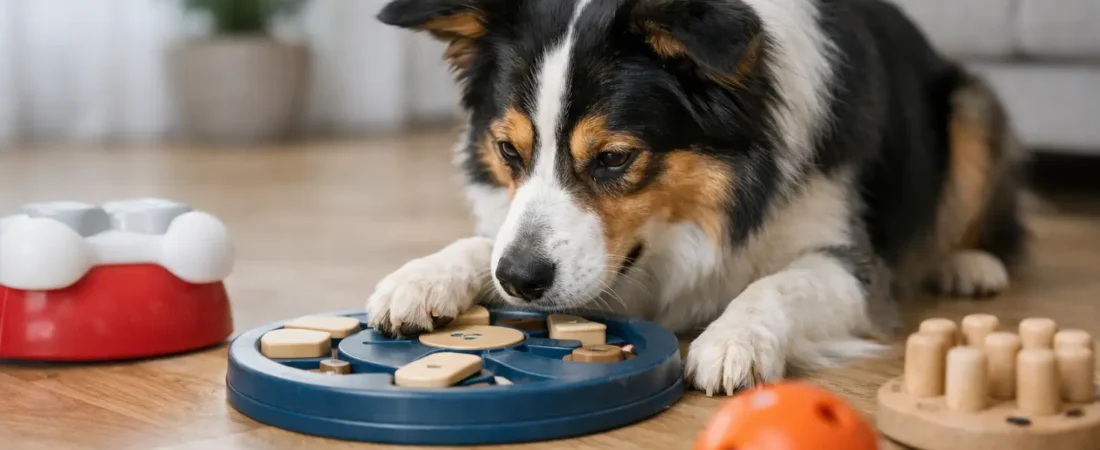
Puzzle boards and treat compartments ask dogs to lift, slide, spin, or move covers to uncover rewards. These can be entertaining for dogs who enjoy working close to the ground rather than chasing a rolling object. A Miniature Schnauzer who patrols every baseboard for crumbs may become an excellent little investigator.
These products can offer more mental challenge, but they require more supervision than a solid rubber toy. Some dogs solve them with their brains; others attempt to solve them by flipping the entire board. Begin by leaving compartments open or partly open, then gradually make the task harder. If your dog bites pieces instead of manipulating them, remove the toy and choose a sturdier, simpler format.
How to Test a Dispenser Without Setting Up a Frustration Case
The first session should be embarrassingly easy. Load a small portion of familiar food, show your dog that rewards are inside, and let them discover the action that pays off. For a rolling dispenser, you may need to give it one gentle push. For a stuffed toy, leave food visible at the opening.
Watch what happens in the first few minutes. Relaxed sniffing, pawing, licking, and returning to the toy are good signs. Repeated whining, hard biting, frantic pacing, or walking away may mean the toy is too difficult, too noisy, or simply not appealing. Some dogs prefer licking to rolling. Others want movement, not a stationary project. The jury has spoken.
Keep early sessions short and pick them up when finished. This prevents overfeeding, protects the toy from unsupervised destruction, and preserves novelty. If a dispenser becomes part of every meal, rotate two or three styles so the routine does not become predictable.
What “Easy to Clean” Really Means
A dispenser earns high marks only if humans will use it more than once. Dishwasher-safe materials are convenient, but check whether the toy has hidden channels, threaded caps, or narrow cavities that trap food. A smooth interior, a wide fill opening, and a shape that can be rinsed thoroughly matter more than clever packaging promises.
Dry-food toys need regular washing too. Kibble dust, saliva, and oils accumulate, particularly in adjustable openings. For soft-food toys, wash after every use and dry fully before refilling. Keep a small bottle brush reserved for pet gear, and inspect crevices during cleanup. Bailiff Rex has no patience for microbial loopholes.
Match the Toy to the Moment
A puzzle dispenser is most useful when it has a job. Use a rolling toy for a burst of indoor activity on a rainy day. Offer a stuffed rubber option during a video call, while cooking dinner, or when visitors need the dog to settle. Bring out a compartment puzzle for a supervised brain game when you have a few minutes to participate.
Do not treat enrichment as a substitute for walks, training, social contact, or veterinary care. It is a helpful supporting character, not the entire cast. Dogs with dental pain, dietary restrictions, resource guarding, or a tendency to swallow nonfood items may need a veterinarian or qualified trainer’s guidance before puzzle toys enter the record.
The right dispenser should leave your dog satisfied, not defeated, and leave you with a washable toy rather than a household crime scene. Start simple, observe closely, and adjust the difficulty as your canine counsel gains experience. A few well-earned crumbs can make an ordinary afternoon feel like a verdict worth celebrating.