


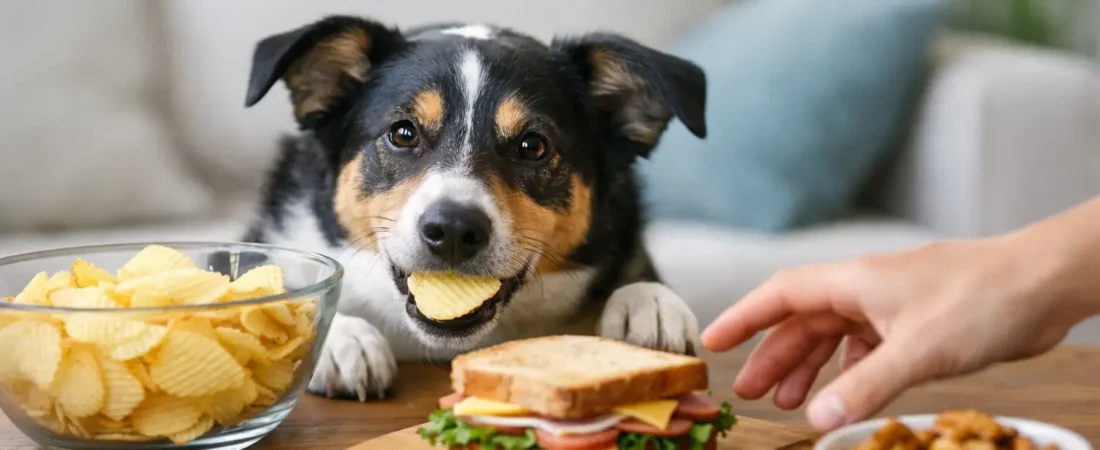
You looked away for four seconds. The chips vanished. The dog is suddenly in another room, chewing with the focused silence of a career criminal. If you have ever wondered why dogs steal snacks, the court has reviewed the evidence, and the answer is less about spite and more about a very efficient canine brain.
Snack theft is one of those behaviors that feels personal because it is so bold. Your dog does not just want food. Your dog wants your food, preferably the exact item you set down for one moment while answering a text or opening the fridge. Annoying? Absolutely. Mysterious? Not really. Most dogs steal snacks because it works, it pays well, and human households are full of edible opportunities.
Why dogs steal snacks in the first place
Dogs are natural scavengers. Even well-fed dogs are wired to notice food, investigate it, and grab it when the opportunity looks good. From a survival standpoint, that makes perfect sense. If food appears and no one is actively defending it, taking it is a smart move.
Domestic life has not erased that instinct. It has just upgraded the menu. Now the scavenging target is not a scrap near a campfire. It is half a turkey sandwich on the coffee table, a bag of pretzels at couch level, or a toddler dropping crackers like a tiny, generous accomplice.
Then there is reinforcement, which is the prosecution’s star witness. If your dog steals a snack and gets to eat it, the behavior is rewarded immediately. Dogs do not need a long lecture to understand results. They just learn, very quickly, that counter surfing or swiping from a low table can produce excellent outcomes.
Some dogs are also more motivated than others. Labradors, beagles, goldens, terriers, and many mixed breeds can be especially persistent around food, though honestly, most dogs are willing to hear a case on stolen cheese. Age matters too. Puppies and adolescents tend to test limits, explore more, and make highly questionable choices with great confidence.
The real reasons snack theft keeps happening
Usually, stolen snacks are not about hunger alone. A dog can finish dinner and still launch a stealth operation for pizza crust an hour later. Food appeal, convenience, boredom, habit, and excitement all play a role.
Opportunity is half the case
If snacks are accessible, many dogs will try. Low coffee tables, open bags left on the couch, plates within nose range, and unattended lunches create easy wins. Dogs repeat easy wins.
This is why some owners feel like the behavior came out of nowhere. In reality, the setup changed before the dog did. Maybe your dog got tall enough to reach the counter. Maybe visitors started leaving food around. Maybe one lucky theft taught your dog that the kitchen island is not a decorative surface but a buffet with weak security.
Reward history matters more than your disapproval
Humans tend to think, “He knows he was bad.” Dogs tend to think, “That grilled cheese was worth it.” If the reward is strong enough, your dog may keep taking the chance even if you sound deeply offended afterward.
That is why scolding after the fact rarely fixes the issue. Your dog is unlikely to connect your delayed frustration with the earlier theft in the precise way you hope. More often, your dog learns that humans become loud when snacks are gone, which is not the same as learning not to steal them.
Some dogs steal snacks because life is a little boring
Food seeking is stimulating. It gives dogs a job to do, especially if they do not get enough mental enrichment, sniffing, training, or chew time. A dog left to self-entertain may start checking counters and tables because it is interesting and occasionally profitable.
This does not mean every snack thief is under-exercised. Plenty of active, loved, well-managed dogs still steal food. But boredom can lower the bar for mischief.
Stress and arousal can make food grabbing worse
Busy homes, guests, kids eating on the move, and holiday chaos can all increase impulsive behavior. A dog that is overexcited or unsettled may have a harder time resisting temptation. In those moments, self-control is not exactly at peak performance.
Is snack stealing ever a sign of a bigger problem?
Sometimes. If your dog suddenly becomes obsessed with food, acts unusually ravenous, raids trash constantly, or seems unable to settle after meals, it is worth paying attention. Medical issues such as parasites, diabetes, medication side effects, or other conditions can affect appetite and behavior.
There is also a difference between a dog who opportunistically steals a cookie and a dog who seems frantic around food. If the behavior feels intense, new, or out of character, a veterinary check is a reasonable next step. The court enjoys comedy, but not at the expense of common sense.
How to stop snack theft without turning your house into a prison
The fastest way to reduce stealing is not a dramatic courtroom speech. It is management plus training. Management prevents rehearsal. Training builds better habits. You usually need both.
Start by making snack theft harder
Put food away. Clear plates promptly. Push items back from counter edges. Use baby gates if needed during meals or parties. If your dog keeps succeeding, your dog keeps practicing.
This part feels boring because it is boring. It is also effective. A dog cannot steal what is not available. For many households, this step alone cuts the problem in half.
Teach an alternative behavior
Dogs do better when they know what to do instead. During your own snack time, teach your dog to go to a bed, mat, or designated spot and stay there for occasional rewards. This turns food moments into a predictable routine instead of an open audition for larceny.
Start small. Ask for the mat behavior when you have a low-value snack and can pay attention. Reward calm staying. Gradually build duration and work up to more tempting situations. If you jump straight to nachos on movie night, the defense may claim entrapment.
Practice leave it and off, but use them well
“Leave it” can be helpful for food on the floor or accessible temptations. “Off” may help if your dog is putting paws on furniture or counters. But cues are not magic if the dog has a long reward history of stealing. They need steady practice away from high-stakes snacks first.
Also, avoid using the cue after your dog already has the food. At that point, the case is largely closed. Prevention matters more than late objections.
Meet the need for foraging and chewing
If your dog loves using their nose and mouth, give that energy a legal outlet. Food puzzles, stuffed toys, scatter feeding, sniff walks, and safe chew options can reduce the appeal of inventing a personal snack investigation.
This is especially useful for smart, food-driven dogs who seem to patrol the kitchen out of habit. They often need a better hobby, not just stricter rules.
Keep everyone in the house on the same ruling
One person training while another person feeds scraps from the couch can slow progress fast. Dogs are excellent pattern readers. If Grandma drops deli meat on purpose and the kids leave crackers everywhere, your dog will file that under favorable precedent.
Consistency does not mean perfection. It means the household mostly agrees on what happens around human food.
Why punishment usually backfires
Harsh corrections can make some dogs anxious around food or around people near food. Others simply become sneakier and faster. Neither outcome is especially helpful.
There is also a safety issue. Dogs who feel threatened around food may start guarding. That is a much bigger problem than a stolen pretzel. It is better to prevent access, reward the behavior you want, and create routines your dog can actually succeed in.
Why some dogs improve quickly and others do not
It depends on the dog, the household setup, and how long the behavior has been paying off. A young dog with a short history of stealing may improve quickly once management gets tighter. A determined adult dog who has spent three years successfully lifting sandwiches may require more patience.
Breed tendencies, impulse control, stress level, and daily enrichment all matter. So does realism. If your dog is exceptionally food motivated, the goal may not be to create a saint who ignores an unguarded steak at nose level. The goal may be a dog who makes better choices because the environment and training support those choices.
That is still a win.
The helpful mindset is this: your dog is not plotting against you. Your dog is responding to instinct, opportunity, and reward with very dog-like efficiency. When you change those three things, the behavior usually starts to change too. And if your lunch still disappears once in a while, consider it a reminder that every household needs rules, but some defendants remain very committed to the snack-based arts.