


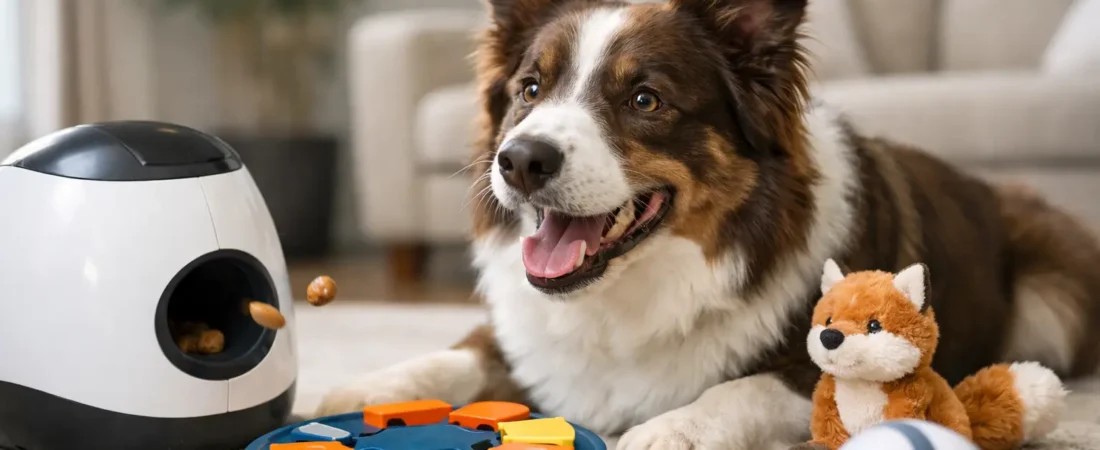
A bored dog rarely files a quiet complaint. More often, the case arrives as shredded mail, dramatic barking at the window, or a couch cushion that has suffered a suspicious and total collapse. Good pet entertainment is not about keeping your dog busy for five minutes. It is about giving that busy brain and body a job that feels satisfying, appropriate, and repeatable.
For most dogs, entertainment is really enrichment with better branding. The goal is not constant stimulation or a mountain of toys scattered across the living room like evidence from a raid. It is matching activities to your dog’s age, energy level, breed tendencies, and daily routine so they can play, sniff, chew, think, and settle in healthier ways.
What pet entertainment really means for dogs
A lot of owners hear pet entertainment and think of flashy gadgets or the latest toy that promises to occupy a dog for hours. Sometimes those products help. Sometimes they get one suspicious sniff and are dismissed by the defendant in under thirty seconds.
What dogs usually want is simpler. They enjoy outlets that tap into natural behaviors. Sniffing, chewing, chasing, licking, digging, problem-solving, and social interaction all count. When entertainment lines up with instincts, it tends to work better and last longer.
That is why a high-energy herding dog may find a puzzle feeder mildly interesting but absolutely thrive on a game that involves movement and direction. Meanwhile, a senior dog with limited mobility might get more joy from a snuffle mat, a frozen lick treat, or short training sessions that make them feel successful without overdoing it physically.
In plain terms, the best pet entertainment is not the most expensive or the most elaborate. It is the option your dog wants to return to.
Why some dogs act bored even in a house full of toys
Many dogs do not need more stuff. They need better rotation, better structure, and better use of what is already in the house. If every toy is available all the time, novelty fades fast. The stuffed squirrel that once inspired a full courtroom drama becomes background decor by Thursday.
There is also the issue of unmet needs. A dog who has not had enough exercise, social time, or mental work may blow through toy options because the underlying need is bigger than the distraction. A chew toy cannot fully make up for a young dog who needs a brisk walk and ten minutes of training. On the other hand, extra running alone may not help a smart dog who needs mental tasks too.
This is where owners sometimes get frustrated. They buy another toy, then another, then begin to suspect their dog is impossible to please. Usually the problem is not the dog. It is the mismatch.
The main types of pet entertainment that work
Interactive food activities are often the easiest win. Puzzle feeders, treat balls, frozen stuffed toys, and snuffle mats slow dogs down and make them use their noses and brains. These are especially useful for dogs who inhale meals or get restless during work-from-home hours. The trade-off is that food-based entertainment loses value if overused or if the challenge level is wrong. Too easy, and the game is over instantly. Too hard, and your dog may quit and hold a silent grudge.
Chew-based entertainment is another strong option. Many dogs relax through chewing, and appropriate chew items can help redirect destructive habits. This works best when the chew matches your dog’s size, chewing style, and supervision needs. Some dogs are delicate nibblers. Others approach every object like they are cross-examining it for weaknesses. Safety matters here, so any chew should be chosen carefully and monitored.
Scent games are underrated. Hiding treats around a room, letting your dog search for a favorite toy, or creating easy nose-work games can be deeply satisfying. Sniffing tires dogs out in a different way than physical exercise, which is helpful for rainy days, apartment living, or dogs who need mental effort more than another sprint around the block.
Training games also count as entertainment, and many dogs love them. Short sessions that teach spin, touch, place, or find it can build focus and confidence while strengthening your bond. The key is tone. If the session feels tense, repetitive, or too difficult, it stops being fun. Keep it brief, reward generously, and end before your dog starts mentally clocking out.
Physical play still matters, of course. Tug, fetch, flirt poles, obstacle games, and hide-and-seek can all be excellent. But this is the category where owners most often overdo intensity. Some dogs get more hyped than happy, especially if the game creates frustration or never teaches them how to settle afterward.
How to choose the right entertainment for your dog
Start with your dog, not the marketing. Ask what they naturally enjoy. Does your dog sniff every blade of grass like a detective with a quota? Lean into scent work. Is chewing their favorite hobby and unofficial profession? Prioritize safe chew options and food toys. Does your dog light up when learning cues or chasing motion? Choose training games or structured play.
Age matters too. Puppies need frequent, short, varied activities because their attention span is limited and their judgment is, legally speaking, underdeveloped. Adult dogs often do best with a mix of exercise, problem-solving, and downtime. Senior dogs may need gentler entertainment that supports comfort and mobility while still engaging the mind.
Temperament matters just as much. A social, bouncy dog may love interactive games with people. A more independent dog might prefer solo sniffing activities or food puzzles. Some dogs become frustrated by challenge toys and need simpler wins. Others solve every puzzle in record time and need extra variety.
You also have to consider your own routine. The best plan is one you will actually use. If a complicated homemade enrichment setup takes forty minutes to prepare, it may not survive the realities of Tuesday morning. Simple options usually win in the long run.
Signs your dog’s entertainment plan is working
A good entertainment routine does not create nonstop excitement. In many cases, the real victory is a calmer dog afterward. If your dog can enjoy an activity and then settle, that is strong evidence the program is doing its job.
You may also notice less nuisance behavior. That can mean fewer attention-seeking antics, less random destruction, reduced pacing, or fewer dramatic appeals from the kitchen while you are trying to make lunch. Improvement is usually gradual, not instant. Dogs are individuals, and behavior changes when needs are met consistently.
Another sign is enthusiasm without obsession. Ideally, your dog looks forward to activities, stays engaged, and can stop when the session ends. If a game makes them frantic, overly vocal, or unable to calm down, it may still be entertaining, but it is not necessarily helpful.
Common mistakes in pet entertainment
One mistake is relying on only one category. Daily fetch can be great for some dogs, but if that is the entire strategy, you may end up with a very fit dog who still lacks mental satisfaction. The same goes for food puzzles alone. A dog may enjoy them, but many still need movement, social interaction, and skill-building.
Another mistake is confusing stimulation with enrichment. Constant noise, flashing toys, or chaotic play can leave some dogs more wired than fulfilled. More input is not always better. Sometimes the most effective activity is a quiet scent game that lets the dog work independently.
Owners also underestimate the power of rotation. You do not need to present every toy like a retail display. Put some away and bring them back later. Familiar items regain value when they return after a short break.
Finally, there is the issue of unrealistic expectations. No entertainment solution will occupy every dog for hours while you attend meetings, answer emails, and ignore a suspicious silence in the next room. Activities help, but they are part of a bigger routine that includes sleep, exercise, training, and connection.
A realistic weekly approach to pet entertainment
For most households, variety beats intensity. You might use a food toy at breakfast, a short walk with sniffing time later in the day, and a five-minute training game in the evening. On another day, you swap in hide-and-seek, a chew session, or a little indoor obstacle course using safe household items.
This approach works because it spreads enrichment across the week instead of treating entertainment like an emergency response after the third stolen sock. It also gives you chances to notice what your dog truly enjoys.
If you want to keep things fun without overcomplicating your life, think in categories rather than perfect schedules. Include something to chew, something to sniff, something to solve, something to move, and something to do with you. That is often enough to keep the household out of appeals court.
The best pet entertainment is not performative. It does not need to look impressive on camera or come in six confusing pieces. If it helps your dog feel engaged, appropriately tired, and a little less interested in redecorating your home with pillow stuffing, the court is prepared to call that a win.